
What happens to equity release when you die?
Quick answer: does my family have to pay it back?
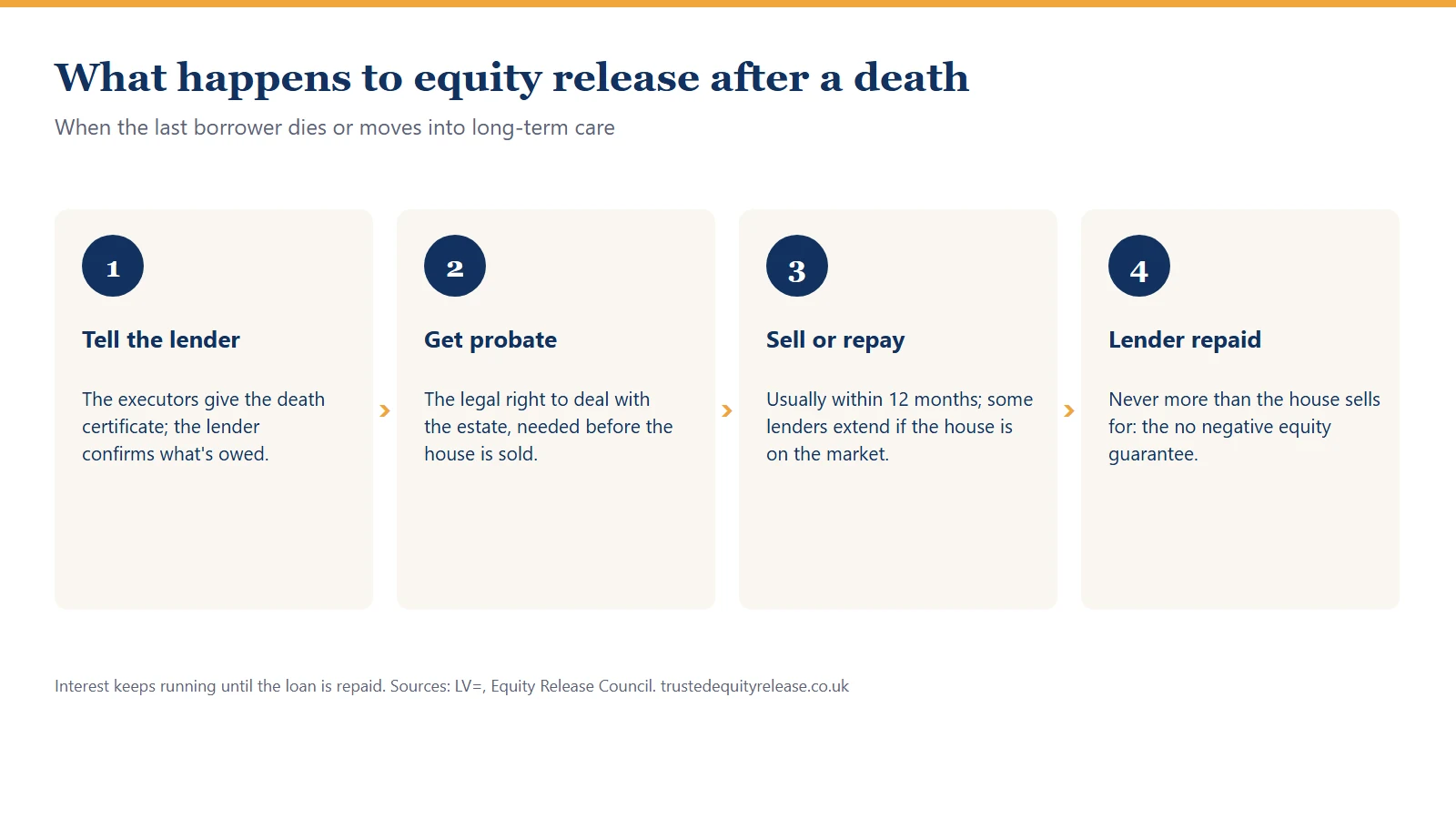
No, your home does. When the last borrower passes away or moves into long-term care, the home is sold and the lender is repaid from the sale, typically within 12 months. The no negative equity guarantee means your estate never owes more than the home sells for.
How long does the family have to sell?
Twelve months is the norm. Once the executors send the death certificate, the lender confirms the amount owed, and LV=, one of the lenders I compare, says equity release most commonly needs to be paid back within 12 months, and that some lenders will extend that if they can see the home is being sold.
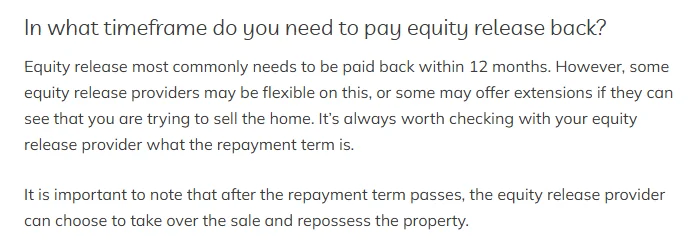
The clock matters because interest keeps being added until the loan is repaid, the same compounding that built the debt in the first place, which my page on how lifetime mortgage interest builds up explains. If the term runs out, LV= says the lender can take over the sale itself. So it pays to put the house on the market as soon as probate allows.
What happens on a joint plan when one of you dies?
Nothing changes for the one left behind. A joint equity release plan carries on until the second borrower dies or moves into long-term care, and the Equity Release Council's standards give the surviving partner the right to stay in the home for life.
If the survivor later needs a care home, the Council's standard is that the early repayment charge is waived once a doctor confirms the move is permanent. The same applies to care with relatives.
Can the family keep the house?
Yes, if they repay the loan another way: from savings, from other money in the estate, or with a mortgage of their own. Whether that works depends on how much is owed against what the house is worth. The heir's side, step by step, is on my page about what to do when you inherit a house with equity release on it.
What if the house sells for less than is owed?
Then the lender takes the loss, not your family. Every Equity Release Council plan carries the no negative equity guarantee: provided the home is sold for the best price reasonably obtainable and the loan's terms have been kept, the borrower or the estate will never owe more than the property is worth, after reasonable selling costs.
It's one reason lenders cap how much you can borrow by age. At 55 the maximum is around 25% to 28% of the home's value, and the calculator shows the limit at your age.
Why ask me about what happens after a death?
Because the family is part of the advice from the start. Before you sign, I set out what the plan means for your estate, how long the lender gives your executors and what the loan could grow to, and your children are welcome to sit in or join by phone. I'm a whole-of-market equity release adviser and a member of the Equity Release Council. Trusted Equity Release is a trading name of Pellucid Ltd, authorised and regulated by the Financial Conduct Authority, FRN 981845. Get in touch.
“Jeremy was very professional throughout the process, kept us uptaded at all times, nothing was too much trouble.”
Sources
- LV=: what happens to equity release after death?
- Equity Release Council: product standards
- Trusted Equity Release: equity release calculator
Book your free initial consultation today.
Pick up the phone and speak to Jeremy directly. If equity release is not the right choice, I will say so.
07768 972861 Or try the quick calculator